
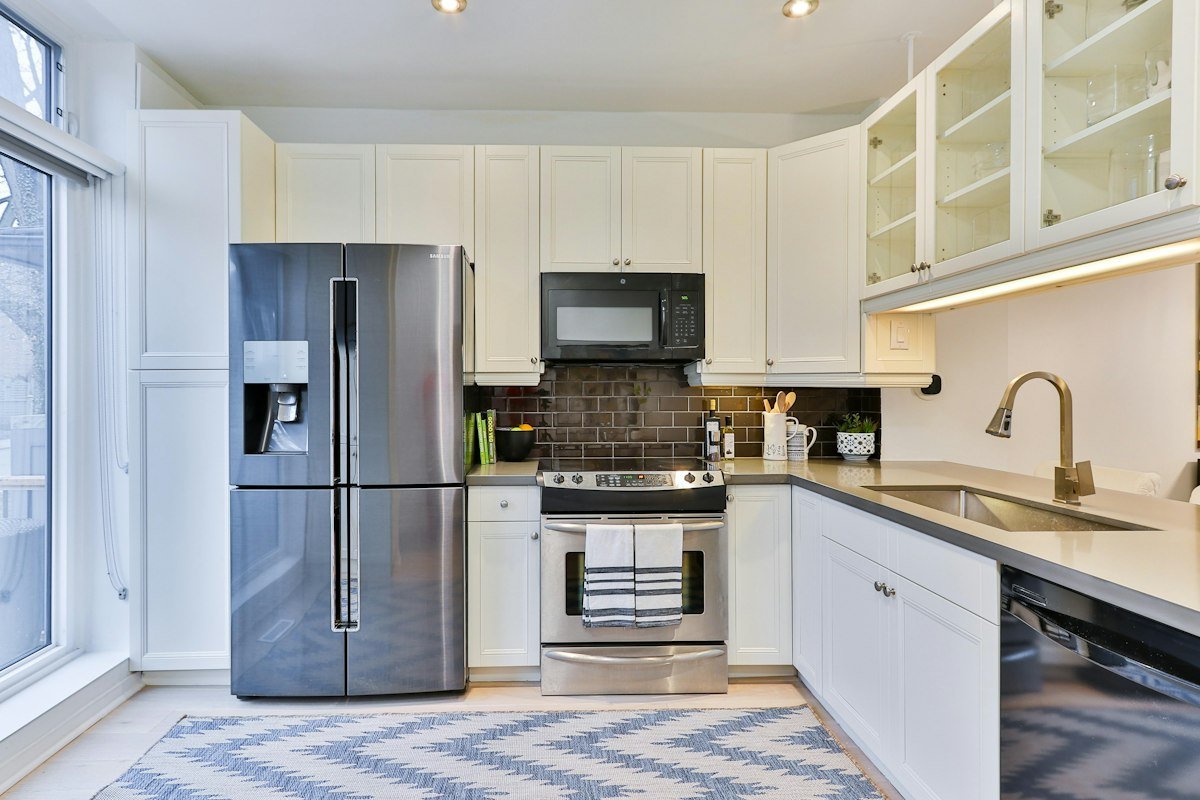
Few household crises spark instant panic quite like opening your refrigerator on a warm Atlantic City afternoon only to discover warm milk, melting butter, and room-temperature beverages. Food safety guidelines indicate that perishable foods stored above 40°F (4°C) for more than two hours become prime breeding grounds for foodborne pathogens.
Whether you reside in a classic shore home near the boardwalk, manage a beachfront rental condominium, or live in the Marina District, our team provides reliable appliance repair in Atlantic City to quickly pinpoint why your refrigeration system has stopped cooling.
Before you toss hundreds of dollars of fresh groceries or panic over buying a brand-new unit, review these 5 common causes of a refrigerator failing to chill, along with fast DIY fixes you can attempt right now.
Quick First Checks: Rule Out the Obvious
Before tearing down panels, verify that the unit's power cord is firmly seated in the outlet, the wall GFCI breaker hasn't tripped, and the digital thermostat wasn't accidentally bumped into "Showroom / Demo Mode" or adjusted to an excessively high temperature setting.
1. Clogged or Salt-Crusted Condenser Coils
Condenser coils are responsible for expelling the heat extracted from inside your refrigerator's compartments. Located either underneath the appliance behind the kick plate or mounted on the lower back exterior, these serpentine metal tubes require unobstructed airflow to transfer heat away.
In coastal communities like Atlantic City, Ventnor City, and Brigantine, airborne ocean salt particles combine with pet fur, household lint, and beach sand. This sticky, fibrous layer insulates the condenser coils, preventing heat dissipation. As heat builds up, the compressor strains, overheats, and automatically cuts off via its thermal overload protector before the cabinet reaches target temperatures.
The Fast Fix:
- Unplug the Refrigerator: Disconnect the power plug from the wall receptacle to work safely.
- Access the Coils: Pop off the lower front snap-in toe grille or gently pull the appliance out from the cabinetry to access the rear panel.
- Vacuum the Mats of Dust: Use a narrow crevice wand attachment on your vacuum cleaner to draw out loose lint and grime.
- Use a Coil Brush: Gently brush between the tight fins with a flexible refrigeration coil brush to release stubborn coastal salt crust.
- Restore Power: Plug the unit back in and allow 4 to 6 hours for internal temperature stabilization.
If your condenser fan motor has stopped spinning altogether while cleaning, professional mechanical intervention will be necessary. For complex sealed and electrical systems, schedule certified refrigerator repair in Atlantic City, NJ with our technicians.
2. Frost Buildup Blocking Evaporator Air Vents
Did you know that in almost all modern refrigerators, the cooling takes place almost entirely in the freezer compartment? A motorized evaporator fan blows chilled freezer air up into the fresh food refrigerator compartment through an adjustable damper duct.
If your freezer is icy cold or covered in white snow while your refrigerator remains warm, the defrost system has likely failed. Components such as the defrost thermostat (bimetal switch), the defrost heater element, or the defrost control timer can fail. When they do, frost accumulates until solid ice blocks the air channels, suffocating airflow into your fresh food section.
The Fast Fix:
- Inspect the Air Diffuser: Look inside the top rear of the fresh food compartment where cold air enters. Put your hand in front of the vent to see if you feel a gentle stream of chilled air.
- Listen for the Fan: Open the freezer door and depress the door switch manually. You should hear the evaporator fan motor whirring smoothly. If it shrieks, rattles, or stays dead silent, the motor or blade assembly has locked up.
- Execute a Forced Defrost: If thick frost is visible on the rear freezer wall, unplug the refrigerator, transfer perishables to insulated coolers with ice, and leave both doors open for 12 to 24 hours with towels placed on the floor to catch melting condensate.
If the freezer section itself is also failing to make ice or hold freezing temperatures, you might be facing an ice maker water valve freeze-up or motor failure. Be sure to check our specialized guide on freezer and ice maker repair to learn how water inlet valves interact with cooling coils.
3. Worn, Dirty, or Warped Door Gaskets
Your refrigerator doors rely on flexible rubber vinyl gaskets embedded with magnetic strips to create an airtight seal against the steel cabinet frame. High humidity during Atlantic City summers forces outside moisture toward cooler indoor surfaces.
Sticky spills, crumbs, and natural aging can cause door seals to harden, tear, or lose their magnetic hold. When warm, humid kitchen air continuously seeps into the cabinet, the refrigeration cycle cannot keep up, resulting in persistent condensation on shelves and elevated interior temperatures.
The Fast Fix:
- Perform the Dollar Bill Test: Place a crisp dollar bill or piece of paper halfway across the door seal and close the door firmly. Try to slide the bill out. If it pulls out effortlessly with zero resistance, your gasket has lost its seal. Repeat this test every 12 inches along both doors.
- Clean with Warm Soapy Water: Wipe down all folds of the rubber gasket using warm water mixed with mild dish soap. Remove syrup and sticky residue that pull the gasket away from the flange.
- Apply Petroleum Jelly: After cleaning, rub a very light film of petroleum jelly along the hinge side of the gasket to keep the rubber pliable and prevent pinching.
- Reshape with a Hair Dryer: If you spot a localized gap, gently warm the vinyl with a hair dryer on medium heat until pliable, then smooth it flat against the cabinet frame while it cools.
4. Malfunctioning Thermostat, Thermistor, or Damper Door
Modern refrigerators rely on electronic sensors called thermistors to monitor cabinet temperatures in real time and relay readings back to the main logic board. A motorized damper door opens and closes in response to these temperature changes to regulate cold airflow.
If a thermistor's electrical resistance drifts out of factory calibration, it may falsely signal the control board that the compartment is already at 37°F when it is actually at 52°F. Similarly, if the motorized plastic damper flap breaks in the closed position, no cold air can pass from the freezer to the refrigerator.
The Fast Fix:
- Verify Factory Recommended Settings: Ensure your control dial or digital touch display is set to 37°F (or mid-range dial setting "4" out of 7).
- Perform a Hard System Reset: Unplug the refrigerator or toggle its dedicated circuit breaker in your service panel for 10 full minutes. This drains residual capacitor charge and resets digital control microprocessor chips.
- Inspect the Air Damper: Shine a flashlight into the interior damper baffle. If the motorized flap does not rotate open when the refrigerator is calling for cooling, the damper motor assembly needs replacement.
| Symptom | Most Probable Cause | DIY Difficulty | Estimated Solution |
|---|---|---|---|
| Freezer cold, fridge warm | Frozen evaporator coils / bad defrost heater or fan | Moderate | Manual 24-hr defrost; fan or defrost sensor replacement |
| Both compartments warm, clicking noise | Failing compressor start relay / overload capacitor | Moderate | Swap 3-pin relay module on side of compressor |
| Both compartments warm, compressor silent | Tripped breaker, faulty control board, or dead thermostat | Easy to Hard | Test power circuit; inspect control board relays |
| Condensation on walls, fridge slightly warm | Loose or torn door gasket letting in humid coastal air | Easy | Clean gaskets; re-seat with heat or install new seal |
| Compressor running non-stop, barely cool | Salt-caked condenser coils or sealed refrigerant leak | Easy (coils) / Pro (gas) | Deep coil vacuuming; EPA refrigerant leak repair |
5. Failing Compressor Start Relay or Sealed System Refrigerant Leak
The compressor is the heart of your appliance, pumping pressurized refrigerant through the closed copper tubing system. To jump-start the compressor motor, modern units utilize a small solid-state starter relay and run capacitor mounted directly to the side of the compressor.
When a start relay burns out, you will typically hear a clicking sound every few minutes as the overload switch clicks on, tries to spin the motor, hums for 3 seconds, and clicks off. The compressor stays lukewarm or cold, and cooling stops completely.
On the other hand, if your compressor runs smoothly without strange sounds yet the interior never drops below room temperature, you could be dealing with a sealed-system freon leak or inefficient compressor valves. Coastal salt air can slowly corrode copper-to-aluminum joints on older coils, leading to micro-leaks.
The Fast Fix:
- Test the Start Relay: Unplug the appliance, pull off the rear access cover, and unclip the plastic relay box from the compressor pins. Shake the relay gently next to your ear. If it rattles like a broken lightbulb filament, the internal ceramic disc has shattered and the relay must be replaced.
- Inspect the Compressor Temperature: A healthy operating compressor should feel warm to the touch (around 100°F - 120°F). If it is scalding hot (over 170°F), it is overheating due to poor ventilation or internal mechanical wear.
Handling refrigerant, recovering EPA-regulated fluorocarbons, and brazing sealed tubing requires specialized licensing and recovery equipment. When refrigeration failure threatens all your fresh meats, cheeses, and produce, don't wait days for an appointment. Request emergency appliance repair in Atlantic City for immediate same-day dispatch.
Keep Your Entire Atlantic City Kitchen & Laundry Running Smoothly
High coastal humidity and heavy summer usage don't just impact your refrigerator. Moisture, hard water deposits, and electrical surges from coastal storms can stress all major home appliances:
- Kitchen Efficiency: If your refrigerator is leaking water onto the kitchen floor, ensure your drainage and dishwashing lines are clear. Learn more about prompt dishwasher repair to protect your kitchen cabinetry from moisture damage.
- Laundry Performance: Excessive beach towel loads and sandy swimsuits can strain wash agitators and drive belts. Our licensed technicians provide dedicated washing machine repair across Atlantic County.
- Dryer Safety: Shore humidity lengthens drying times and causes damp lint to clog vent pipes. Keep your laundry safe and energy-efficient with expert dryer repair and thermal fuse diagnostics.
Frequently Asked Questions
How long does it take for a refrigerator to get cold after being fixed?
A newly repaired or reset refrigerator usually requires between 4 and 12 hours to cool down to safe food storage temperatures (below 40°F), and up to 24 hours to stabilize completely and begin producing full batches of ice.
Is it worth repairing a 10-year-old refrigerator that stopped cooling?
If the problem is a clogged coil, a faulty start relay ($50–$150 repair), or a defrost thermostat, repairing is far more economical than spending $1,500 to $4,000 on a new unit. If the compressor has seized or there is a major leak in an internal refrigerant line, replacement may be the smarter long-term choice.
Do you service all major refrigerator brands in Atlantic City?
Yes. Our network services French door, side-by-side, bottom freezer, and built-in units from Whirlpool, Samsung, LG, GE Profile, Frigidaire, KitchenAid, Bosch, Sub-Zero, Maytag, Viking, and more across all Atlantic City zip codes (08401, 08404, 08405).